 AI image
Culture
How to eat phở: breakfast, street stalls and the rules at the table
Ordering a bowl in Vietnam needs no etiquette manual. A few habits still help.
Key takeaways
- Phở is traditionally breakfast and street food: stool, pot, bowl, done. Many stalls sell until the broth runs out.
- Taste the broth before adding sauces or chili. In Hanoi, among purists, too much seasoning at the table suggests you did not appreciate the broth.
- Ordering mostly means choosing the beef: tái (raw, cooks in the broth), chín (well done), nạm (brisket) and other cuts.
- Slurping is fine. Standing chopsticks upright in rice is not; with phở you simply rest them on the bowl.
Breakfast, street stall, ritual
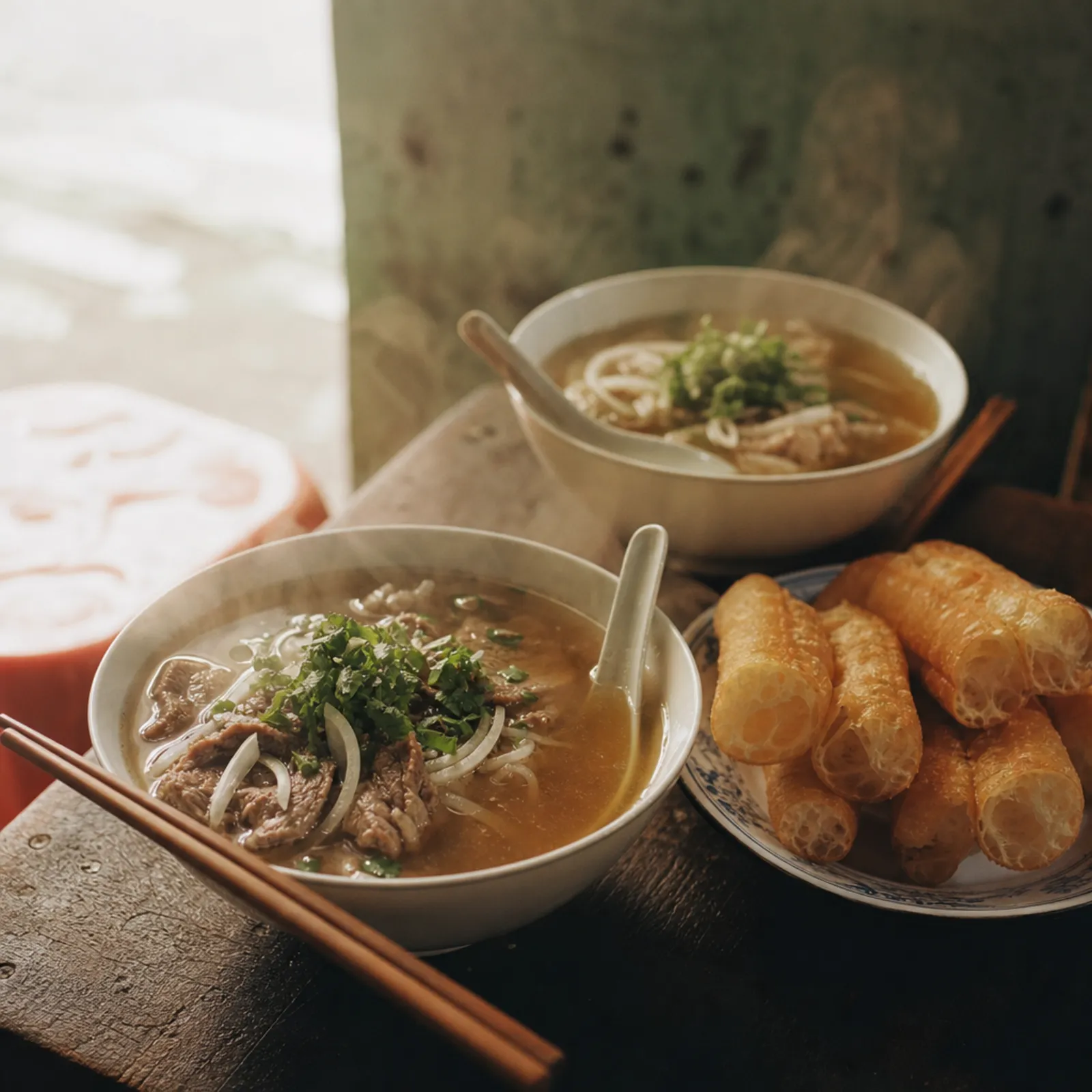
Phở is the dish many Vietnamese link with mornings. In Hanoi the pots stand on the street from early morning, the stools are low, the tables small, and the bowl arrives faster than you could read a menu. Much stays plain: broth, noodles, meat. The effort is in the pot.
You can eat phở at lunch and dinner too, but breakfast stays the classic time. Many stalls sell until the broth is gone and then close, a good reason to come early. Phở is not a heavy feast but an everyday dish, which explains its role as comfort food from home. The bigger picture is in the phở overview.
Why mornings, of all times? The north has cool winters, and a hot broth at six o'clock is not just pleasure but heating. Then there is logistics: the pot needs hours, so the cook starts it at night or the evening before to have it ready for the morning rush. By noon the pot is often empty. That is no accident but calculation: only what sells by late morning gets cooked.
Historically the whole thing was mobile. The phở gánh was a vendor with a shoulder pole, a pot with a fire at one end, bowls and ingredients at the other. People ate on the ground or at the roadside. What remains is the stool culture: low plastic stools, tables barely above knee height, strangers shoulder to shoulder. Whoever sits in such a round for the first time wonders how quickly people start talking, or how quickly they eat without talking.
Businesspeople, schoolchildren, pensioners: breakfast phở is one of the few meals where all classes meet at the same pot. What gets distinguished at the stools is not status but taste. Everyone has their shop, and almost everyone defends it.
AI imageOrdering: beef, noodles, extras
When ordering, the main decision is the beef. The key words:
- tái: thinly sliced raw beef that cooks in the hot broth
- chín: well-done beef
- nạm: flank or brisket point (translations vary)
- gầu: fatty brisket
- gân: tendon, braised soft
- bò viên: beef meatballs
They are often combined: "phở tái nạm" is raw plus brisket. If unsure order tái nạm or chín. Often comes with quẩy, fried dough sticks for dipping, and depending on the stall a plate of herbs. If you dislike scallions say "không hành". For more noodles, "thêm bánh", though that is often extra.
The six words above get you far, but there are more. Tái lăn is beef briefly fried with garlic in a pan beforehand, a Hanoi classic with a stronger roasted note. Nạc means lean meat, sách is beef tripe (usually cut crunchy, not for everybody). Nước béo means "fatty broth"; whoever chooses it gets a bowl with more fat from the top of the pot, and many Hanoians swear by it. Nước trong is the clearer, leaner broth. Sizes differ by shop: small, normal and large tô, and the large bowl is a challenge if you arrive sober from abroad.
If you feel uneasy about raw meat, order chín. With tái the thinly sliced beef cooks in a few seconds and should still be pink when it reaches you. Pure taste: chín is more savoury, tái more tender.
How to handle a phở stall
Total time: 5 min
Sit and order
Sit down, name your bowl with meat ("một tô phở tái nạm") and wait. Menus are rare.
Taste the broth
A spoonful of broth first, before seasoning everything. That is respect for the pot.
Herbs and seasoning
Depending on the style tear in herbs, squeeze lime, add chili. Sauces sparingly.
Eat
Chopsticks in one hand, spoon in the other. Place noodles from chopsticks onto the spoon and add broth.
Pay
Usually at the table or at the register. Check the price first if there is no sign.
 AI image
Etiquette: what is done and what is not
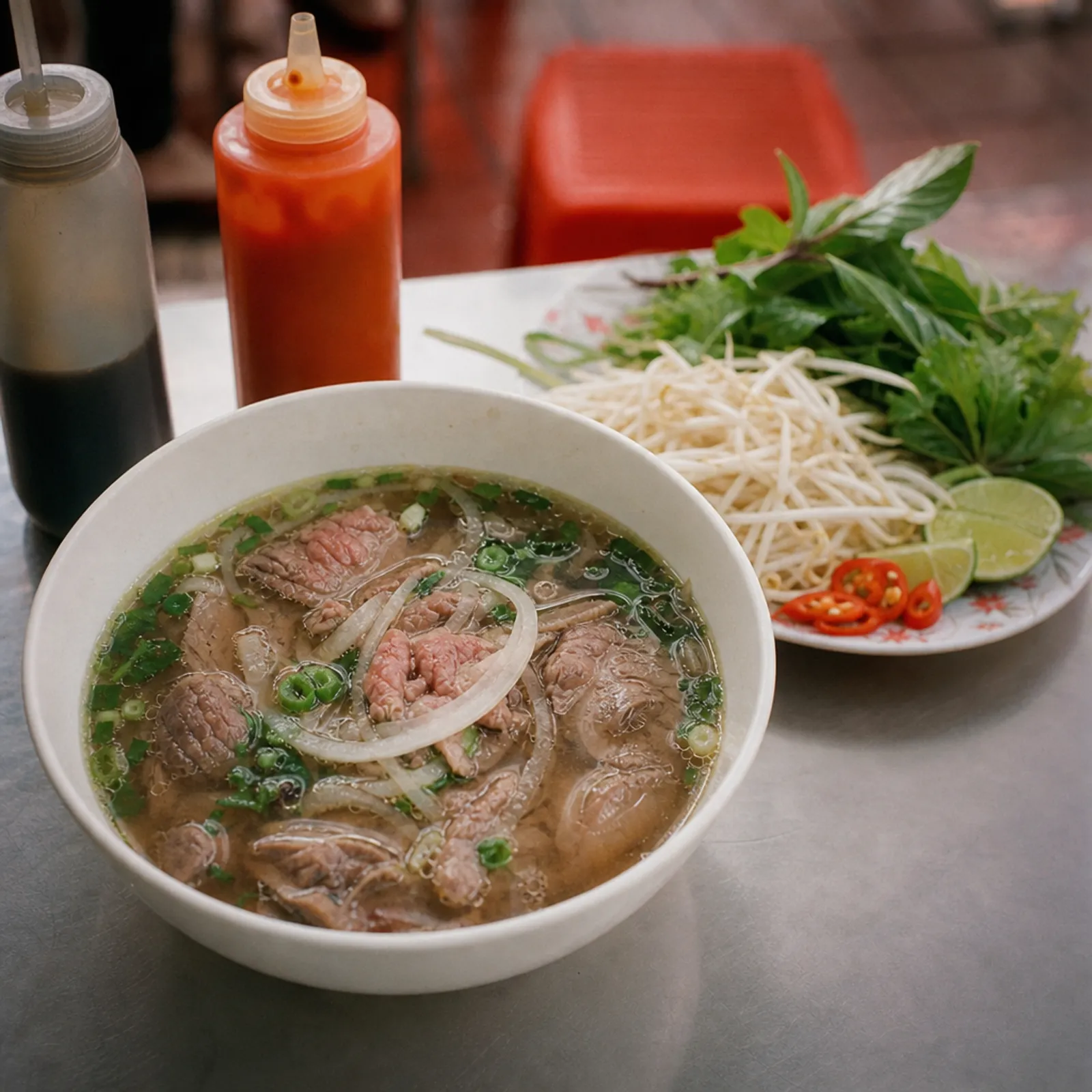
Taste before seasoning. In Hanoi this is almost law: the broth first, then at most some chili, lime or garlic vinegar (tỏi ngâm giấm). Hoisin and sriracha are normal on tables in the south; in the north they earn a look.
Herbs belong. Bean sprouts and basil are torn in; the Hanoi version often has only scallions. Ask if you do not want any.
Never stand chopsticks upright in rice. A general taboo in Vietnam because it resembles incense sticks. With phở you eat from the bowl anyway; rest the chopsticks on the rim or the spoon. For rice culture read our guide to rice and Tết.
Slurping is allowed. It cools the noodles and shows it tastes good. Eat promptly. The noodles keep swelling if the bowl sits. Fish sauce and ingredients are explained in the fish sauce guide.
A few things that appear in no etiquette guide but still help. You pay after eating or at the till; tipping is not customary at a street stall. Rounding up makes nobody unhappy, but it is not expected. Napkins sit on the table in a dispenser, and in some shops the used paper ends up on the floor; that is normal there and not a sign of poor hygiene. Chopsticks and spoon are quickly wiped by many locals before eating. That is a habit, not a vote of no confidence in the shop.
Drinking up the broth is not a faux pas but a compliment, best with the spoon and the bowl rim at your lips. If the queue is long, people eat promptly and free the stool. You tear the herbs with your fingers; there is no cutlery for that.
The biggest beginner mistake is not the chili or the hoisin but drowning the bowl. Two squirts of sauce and you no longer taste any broth. Dose in the ladle, not in the bowl: put the sauce into the spoon, dip noodles and meat into it and leave the broth alone. That way the bowl stays what it was.
Frequently asked questions
Do you eat phở with chopsticks or a spoon?
Both: chopsticks for noodles and meat, spoon for the broth. Many put noodles onto the spoon with the chopsticks.
May I use hoisin and sriracha?
In the south yes, in the north rather not. Taste the broth first, then decide. Nobody will arrest you.
At what time of day is phở eaten?
Classically in the morning, but also at lunch and dinner. Many stalls sell until the broth is gone.
What is quẩy?
Fried dough sticks dipped in the broth. Very common in Hanoi.
What does "không hành" mean?
Without scallions. "Không" means "without/no", "hành" is onion.
Is slurping rude?
No, with noodle soup it is normal and even welcome.
Continue the journey
Keep exploring
As an Amazon Associate we earn from qualifying purchases.