Phobo
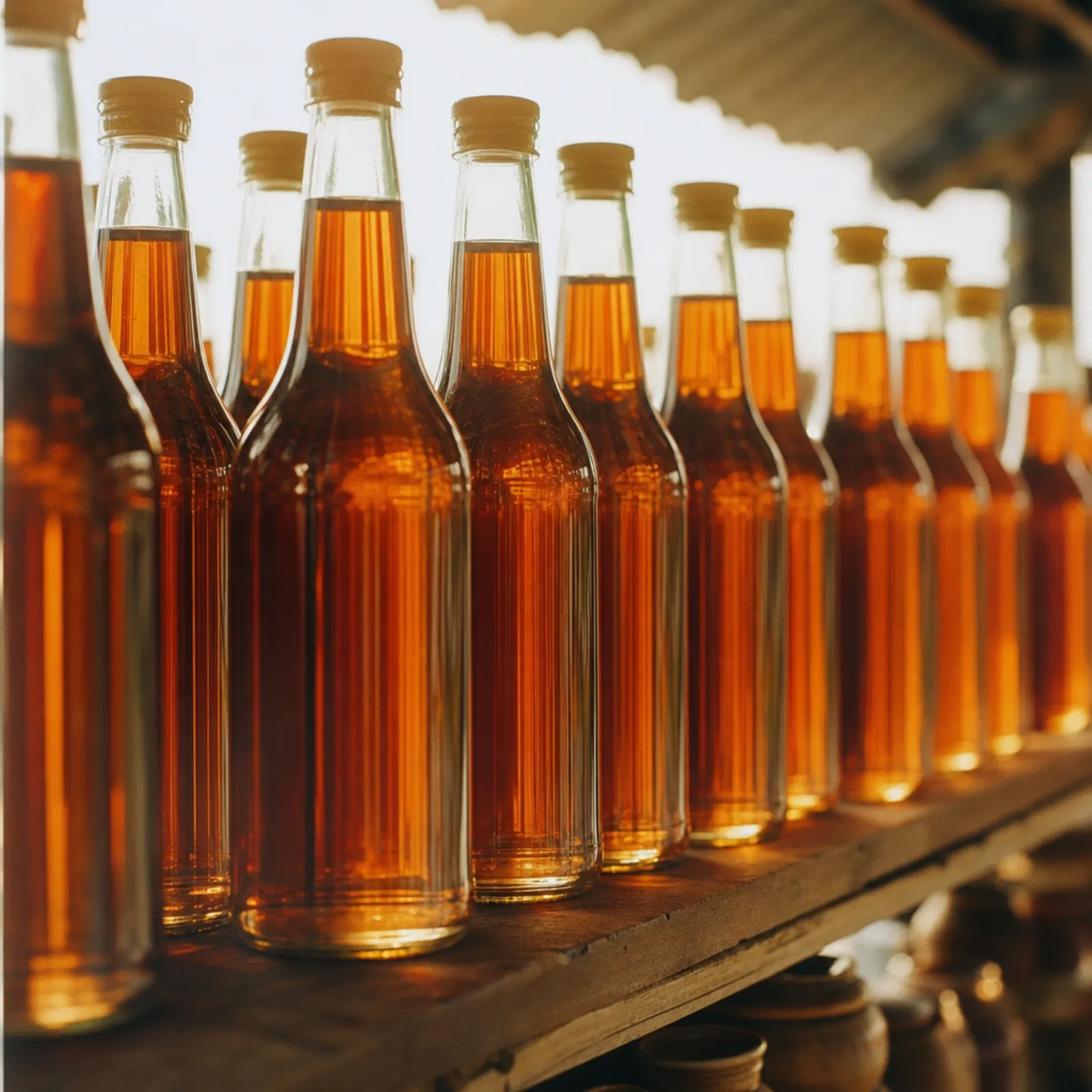
AI-generated: rows of glass bottles of golden-brown fish sauce in a shop on Phú Quốc, light shining throughAI image

Buying guide

Best fish sauce: how to recognise good nước mắm

Two ingredients should be enough. Anything else on the label is a reason to look closer.

By 9 min readUpdated November 5, 2026

Chapters

Key takeaways

  • Good fish sauce is, at its core, fish (usually anchovies) and salt. Sugar, flavour enhancers or preservatives are not the end of the world, but if you want a pure sauce, they are a reason to switch bottles.
  • The nitrogen grade (°N) roughly indicates protein content: 30°N counts as high quality, 40°N as premium. Many supermarket sauces sit well below, often in the mid-20s.
  • For phở broth a decent everyday sauce is enough; for dipping and seasoning at the table premium is worth it, because you use less.
  • Phú Quốc has been registered as an EU PDO since 2012 (certificate handed over in 2013). That guarantees region and production, not that every bottle will suit you.

What fish sauce is and why phở needs it

Nước mắm is a fermented liquid made from fish and salt. Small fish, mostly anchovies (cá cơm in Vietnamese), are fermented with salt in barrels or tanks. Traditionally this takes a year or longer; modern producers often bottle after six to twelve months. The liquid that collects at the bottom is the sauce. The first draw is the most expensive and most intense one; later infusions with salt water give thinner, cheaper grades.

The sauce smells strong, but in broth you do not taste fish. You taste depth, salt and umami. In phở broth it does part of the seasoning and rounds off the beef note. With salt alone the broth tastes flat; with too much fish sauce it tips into saltiness. How it goes in is in the recipe: at the end, in small steps.

AI-generated: rows of glass bottles of golden-brown fish sauce in a shop on Phú Quốc, light shining throughAI image
Good fish sauce is clear, amber to reddish brown. Colour alone does not tell the whole story, though.

Reading the label

Ingredient list. Ideally: fish extract or anchovy, salt, maybe water. Sugar or fructose is in many everyday brands and is tolerable for broth and marinades. Be sceptical about flavour enhancers, hydrolysed vegetable protein and preservatives: they replace depth that should come from the fish. A list longer than three or four lines reads more like a seasoning blend.

Nitrogen grade (°N). The figure on many bottles (for example 30°N or 40°N) states how much nitrogen is in a litre, so roughly how much fish protein is in the sauce. As a rule of thumb, 30°N counts as high quality and 40°N as premium; many supermarket sauces sit clearly below. The figure is a hint, not a quality seal: a high number says nothing about additives or whether you like the profile. If the number is missing entirely, the producer usually is not advertising it, and you can expect everyday quality.

Colour and smell. Good sauce is clear, amber to reddish brown, with a sea smell that is not rotten. Very dark, sweet-smelling sauces are often rounded off with sugar or caramel. That is not automatically bad, just a different sauce.

Origin. Phú Quốc is the best-known region. The name has been registered in the EU as a PDO (protected designation of origin) since 2012; Regulation (EU) No 928/2012 dates from October 2012, and the certificate was handed over in 2013. Under that name only sauce made on the island may be sold in the EU. That is real progress against imitations, but an origin does not replace looking at the label. Other regions such as Phan Thiết also have a good reputation.

Comparison

TypeForLabel hintNoteView on Amazon
Premium (e.g. Red Boat)Dip, seasoning, brothAnchovy and salt, 40°Nintense, little neededView on Amazon
Phú QuốcDip, brothOrigin on the bottlequality varies by brandView on Amazon
EverydayBroth, marinadesFish extract, salt, often sugaruse sparingly in dipsView on Amazon

No prices shown, they change daily on Amazon.

Our picks

This page contains affiliate links. As an Amazon Associate we earn from qualifying purchases. The price for you stays the same.

Our pick

Fischsauce Red Boat (Phú Quốc, 40°N)

According to the maker only anchovy and salt, 40°N, first draw. Exactly the sauce you use sparingly at the table and for fine seasoning. For the broth it is almost too good; for dipping and rounding off it pays off.

Pros
  • short ingredient list
  • little needed, lasts long
  • consistent quality
Cons
  • higher price per bottle
  • fish (allergen)
View on Amazon

Fischsauce aus Phú Quốc

Phú Quốc origin, classic for dips and broth. The range under this origin is wide: read the ingredients anyway and watch the °N value.

Pros
  • well-known region
  • versatile
Cons
  • brands differ a lot
View on Amazon
Everyday

Fischsauce für jeden Tag (Fisch und Salz)

For large batches of broth, marinades and soups, when you are not dipping. Well-known supermarket brands are fine here, but depending on the country they often contain sugar or hydrolysate.

Pros
  • affordable base
  • large bottle
Cons
  • more additives possible
  • less depth
View on Amazon

Brands on the shelf: what to expect

In an Asian grocery you will usually find three groups side by side.

Premium bottles with a short list. Red Boat is the best-known example: according to the maker, wild-caught black anchovies from Phú Quốc and sea salt, 40°N, with no added water, flavour enhancers or preservatives. Those are the maker's claims; we have not lab-tested them. If you like to compare, you will find similar sauces from smaller producers on Phú Quốc or in Phan Thiết. What they share is the price: clearly more expensive per litre than everyday ware, but you get by with drops and teaspoons.

The big everyday brands. Three Crabs and Megachef sit in almost every Asian supermarket and are used by many home cooks, including some who know premium. The recipe varies by country and batch: for Three Crabs, retailer listings show versions with fish extract, salt and water, others with fructose or sugar and corn-derived hydrolysate; for Megachef, a UK retailer listing names a high sugar share, acetic acid and a preservative. So always read the label of the bottle you buy, not a list from the web. For broth and marinades these sauces are usable; for dipping they sometimes lack depth, so you need more sugar or lime to compensate. If a hydrolysate ingredient bothers you, go for the shorter ingredient list.

Supermarket fish sauce labelled "Asian". This is where it gets murky: small bottles, high price per litre, often diluted. Better to buy a bottle in an Asian grocery, where the choice is bigger and stock turns over faster.

Using and storing it

In the broth: at the end, a tablespoon at a time, tasting. There are two reasons: the aroma is volatile and partly lost in long cooking, and a reducing broth concentrates the salt, so adding early leaves you guessing where you will land. At the table: a few drops in the bowl if the broth still needs something.

As a dip (nước chấm): fish sauce, sugar, lime juice, water, garlic and chilli. The ratio is a matter of taste; start with one part each of fish sauce, sugar and lime juice, and dilute with two to three parts water until it sits between salty and sweet-sour. This is where premium pays off, because a dip shows the sauce's flavour bare.

Storage: cool and dark, closed tightly. Many producers do not require the fridge, but follow the note on the bottle. A cupboard in the hallway is better than the shelf next to the stove. Salt crystals at the neck of the bottle are harmless; a damp cloth is enough. Over time the sauce darkens and the aroma flattens; for the dip, freshness matters more than for the broth.

Which spices carry the broth otherwise is in the guide to spices and ingredients. The matching gear for the kitchen is in the equipment guide. If you want the whole journey, start at the phở overview.

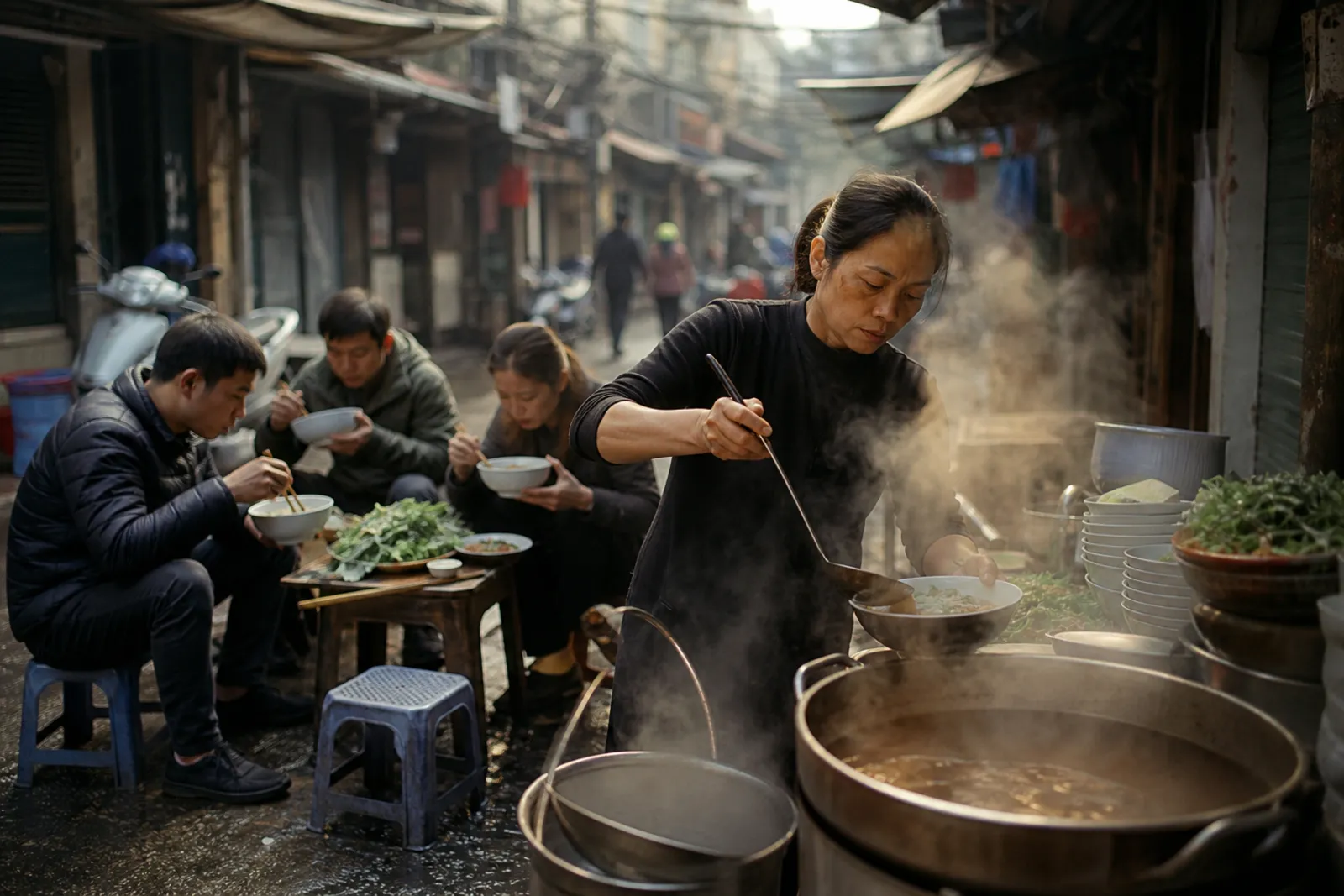
AI-generated: a phở stall in Hanoi's Old Quarter at dawn, low plastic stools, customers over steaming bowlsAI image
A bottle of fish sauce stands next to chilli and lime on almost every table.

Our opinion: premium or everyday?

The honest answer: both, for different purposes. If you cook phở every two weeks and rarely other Vietnamese food, one bottle of everyday sauce for broth and marinades plus a small premium bottle for the table is enough. You only pay more where you can taste it.

If you buy just one bottle, take a mid-range sauce with a short ingredient list, ideally fish, salt and water, without hydrolysate. We think little of "the best fish sauce in the world"; tastes and kitchens differ too much, and brands change their recipes. What counts: read, taste, switch as needed.

Why not premium everywhere? Because in a broth cooked for three hours, where bones, spices and roasted aromas all speak up, the difference between good and very good fish sauce is small. In a raw dip, with only lime, sugar and garlic beside it, you taste it immediately. The phở bò recipe uses three tablespoons for four servings as a starting point; taste in small steps before pouring in more.

One more typical bad buy: buying a premium bottle on principle and then pouring it into water by feel gains you nothing. A mid-range sauce, dosed deliberately, beats an expensive one that disappears in a pot of water.
Checking fish sauce in the shop

Total time: 5 min

  1. Read the ingredient list

    Fish, salt, at most water and a little sugar. Hydrolysate, flavour enhancers and preservatives are the signal to keep looking.

  2. Look for °N

    If a number is printed, compare: 30°N or more is a good sign. If it is missing, expect everyday quality.

  3. Hold the bottle to the light

    Clear, amber to reddish brown, no sediment. Strikingly dark or cloudy means: cross-check against the ingredient list.

  4. Compare size and price per litre

    A small bottle looks cheap but is often twice as expensive per litre as the large one. Work out the price per litre before you decide.

  5. Check the best-before date

    In an Asian grocery some bottles sit on the shelf for a long time. Buy the one with the later date.

Frequently asked questions

Does phở taste of fish?

No. Properly dosed, fish sauce adds depth and saltiness, not a fish taste. With too much the broth tips into saltiness.

What is the difference to Thai fish sauce?

Both are fermented fish sauces, but recipes and fermentation differ by brand and country. Neither is better across the board. For Vietnamese dishes Vietnamese sauce makes sense, because recipes are tuned to its profile.

Can I use soy sauce instead of fish sauce?

As an emergency substitute yes, but the taste is different: less depth, a different salt note. Sensible for a vegetarian broth.

How long does fish sauce keep?

Unopened a long time, opened for months if stored cool and dark. The best-before date on the bottle applies.

What does °N on the bottle mean?

The nitrogen grade shows the nitrogen content per litre and so roughly the protein content. Higher usually means more intense and more expensive. 30°N counts as high quality, 40°N as premium.

Is Phú Quốc fish sauce protected?

Yes. The name has been registered in the EU as a PDO since 2012, and the certificate was handed over in 2013. In the EU only sauce made on the island may be sold under that name.

Where do I buy good fish sauce?

In an Asian grocery or online. Check the ingredient list, prefer bottles with clear amber sauce, and compare per litre.

Continue the journey

Keep exploring

As an Amazon Associate we earn from qualifying purchases.