Phobo
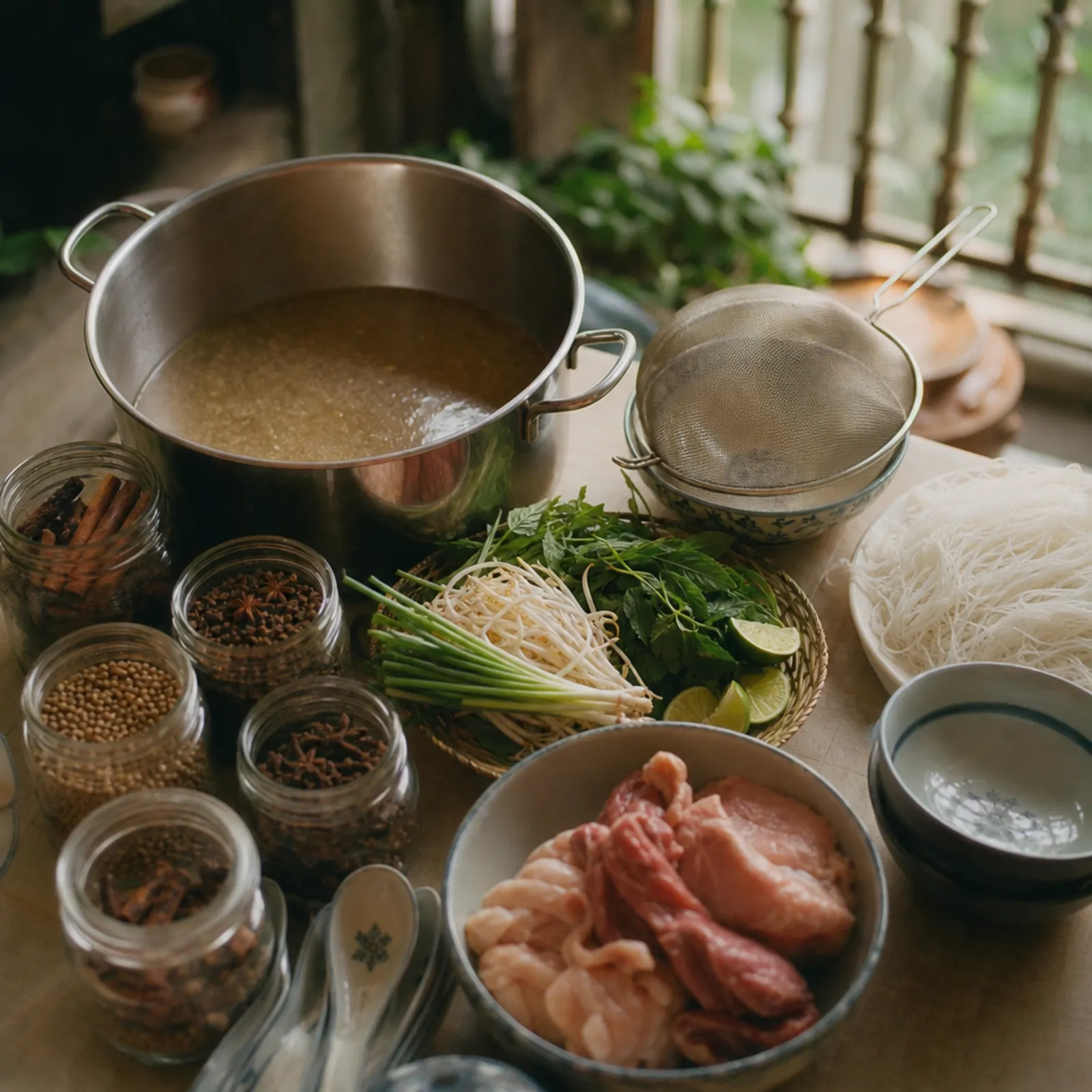
AI-generated: flat lay of a home phở kit: large pot, fine strainer, ceramic bowls, spoons, spice jars, rice noodles and a bottle of fish sauceAI image

Equipment

Cook phở at home: the kit

You do not need a professional kitchen. A large pot, a fine strainer and decent bowls are enough.

By 9 min readUpdated November 5, 2026

Chapters

Key takeaways

  • Phở needs little technology, but a large pot (8 to 12 litres), a fine strainer and a skimmer for the foam.
  • A pressure cooker gets the broth to a usable level in about an hour of pressure time, but does not replace the deeper long version. Mind the fill limit: in a 6-litre pot you cook a smaller batch.
  • Large, deep bowls (from about 900 ml) and ceramic spoons are not decoration: they keep the broth hot and make eating more pleasant.
  • Prioritise: pot and strainer first, then bowls, then accessories. Spices, noodles and fish sauce belong to shopping, not equipment.

The basics: what the broth needs

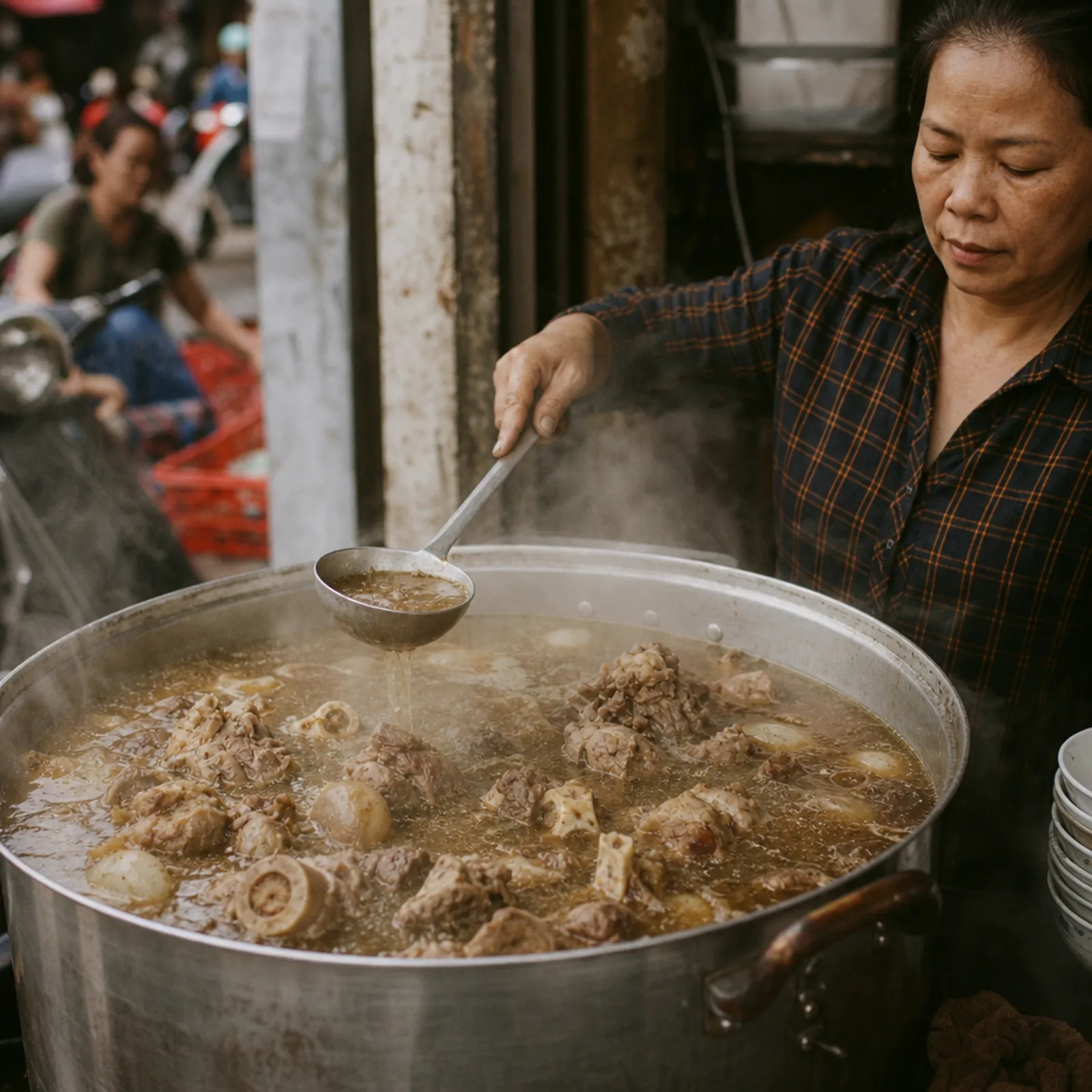
Good phở is made in the kitchen, not in the gadget shop. Above all you need space: four litres of water and 1.5 kg of bones need a pot with a hand's breadth of free room at the top, so foam and bubbling do not boil over. That means 8 litres as the lower limit, and 10 to 12 litres if you cook in stock. A heavy base holds heat more evenly and lets you lower the heat until the broth only murmurs. That matters more than any accessory, because boiling broth turns cloudy.

For skimming and for spices you need a skimmer (spider) or a large slotted spoon. For straining you need a fine-mesh strainer (20 to 24 cm diameter) through which the broth runs clear. If you want it clearer, line it with a clean kitchen cloth or cheesecloth. The spices (star anise, cinnamon, cloves, cardamom) go in a spice bag: muslin tied with kitchen string, a tea egg, or a stainless steel infuser with a lid. That way you fish them out in one go after about two hours, before they turn bitter. How it all fits together is in the recipe.

Stove and heat. A 10-litre pot of broth needs a hob that carries it and can keep it low. On induction that works well as long as the pot base is magnetic and covers most of the plate. On gas, set the smallest flame and check after a quarter of an hour that the broth is rising gently in only one spot. A lid set slightly ajar helps hold the temperature without boiling over.

AI-generated: a huge steel pot of simmering beef broth at a street stall, a woman skimming the surfaceAI image
The big pot is the key purchase: space so nothing boils over.

Broth and kitchen

This page contains affiliate links. As an Amazon Associate we earn from qualifying purchases. The price for you stays the same.

Our pick

Großer Suppentopf (8–12 l) Edelstahl

A large, heavy stainless steel pot of 8 to 12 litres is the purchase you feel most with phở. Look for a thick sandwich base (it holds heat evenly), sturdy handles and a lid that closes tightly. On induction the base must be magnetic.

Pros
  • enough room
  • even heat
  • also for stews and preserving
Cons
  • needs storage space
  • very heavy when full
View on Amazon

Feinmaschiges Sieb (Edelstahl, Ø 20–24 cm)

A fine strainer decides whether the broth reaches the bowl clear or cloudy. Stainless steel with a sturdy rim and a hook to hang over the pot is handy.

Pros
  • clear broth
  • versatile
Cons
  • fine mesh clogs, rinse straight away
View on Amazon

Schaumkelle / Drahtsieb (Spider)

For skimming, fishing out spices, lifting out meat. Also useful for noodles and vegetables day to day.

Pros
  • practical
  • easy to clean
Cons
  • a large slotted spoon will do in a pinch
View on Amazon
For the rushed

Schnellkochtopf (6–8 l)

The broth becomes usable in about an hour of pressure time. Good flavour, but not as deep as long simmering. Important: the pot may only be filled to two thirds (follow the maker's guidance), so in a 6-litre model you cook a smaller batch than in the recipe.

Pros
  • saves time
  • also for other dishes
Cons
  • limited fill volume
  • seal and valve need care
View on Amazon

Gusseiserne Pfanne zum Rösten

For roasting ginger, onion and spices. Cast iron holds heat; a coated pan copes less well with dry roasting.

Pros
  • even roasting
  • robust
Cons
  • heavy
  • needs care
View on Amazon
AI-generated: flat lay of a home phở kit: large pot, fine strainer, ceramic bowls, spoons, spice jars, rice noodles and a bottle of fish sauceAI image
The whole kit at a glance: pot, strainer, bowls, spoons, spices.

Bad buys and things you do not need

Kitchen equipment sells a lot that nobody needs for phở. These are the mistakes we see most often.

A pot that is too small. A 5-litre pot does not hold the recipe. You overfill, the foam boils over, and you lose broth while skimming. Better buy one size up, as it will also serve for stews, jam and broth in stock.

Thin-walled pots. They are light, but the base scorches, and it is harder to keep the heat low. Phở should not boil, it should steep.

Cheap strainers with wide mesh. Bone splinters and spice remnants fly straight through. Spend a few euros more on a fine stainless steel strainer and add a cloth if you want it clearer.

Special broth gadgets. There are spice bags, fat separators and temperature probes. A fat separator is handy, but a large spoon plus the fridge (the fat sets on top and lifts off) does the same. A thermometer is a nice extra, not a must. The only thing that matters: a gentle simmer, no rolling boil.

Porcelain that is too fine. Thin soup bowls look elegant but cool quickly and hold too little.

Plastic strainers and bowls are no good for hot broth either: never pour boiling liquid through a strainer that is not heat-resistant.
At the table: bowls, spoons, noodles

What matters at the table is heat and space. Phở is served in large, deep bowls (from about 900 ml) that you warm beforehand with hot water. Thin porcelain cools fast, thick ceramic holds. For the broth you need a spoon with a broad bowl; Asian ceramic spoons are made for it, pick up broth well and feel pleasant in the mouth. Chopsticks for the noodles complete it. If you have none, use a fork, but you will notice that slurping noodles goes faster with chopsticks.

The noodles and the spices are part of shopping. What to buy and what to look for is in the guide to spices and ingredients and the fish sauce guide. How to eat it then is explained in eating phở: culture and etiquette.

Serving

This page contains affiliate links. As an Amazon Associate we earn from qualifying purchases. The price for you stays the same.

Our pick

Große Nudelschalen (900 ml+)

Large, deep bowls keep broth, noodles and meat together and the warmth longer. Check the capacity in the product data (from 900 ml) and whether the bowls are microwave and dishwasher safe.

Pros
  • lots of room
  • robust
  • hold the heat
Cons
  • take up cupboard space
View on Amazon

Asiatische Suppenlöffel Keramik

The broad ceramic spoon picks up broth and feels pleasant in the mouth. A metal spoon gets very hot in hot broth.

Pros
  • good for spooning
  • fits the look
Cons
  • fragile
View on Amazon

Reisbandnudeln Bánh Phở (getrocknet)

Dried rice noodles are the stock that always works. Buy wide ribbons (about 3 to 5 mm) and cook them separately from the broth, following the pack.

Pros
  • long shelf life
  • quick to prepare
Cons
  • not as tender as fresh
View on Amazon

Three scenarios: what suits you

You are cooking phở once to try it. Borrow a large pot, use the slotted spoon you already have and a normal strainer with a kitchen cloth. Buy nothing but ingredients. If the broth turns clear and you like the result, you will know where equipment holds you back.

You want to cook it regularly. Then the pot (8 to 12 litres), a fine stainless steel strainer and two or three large bowls are worth it. That lasts for years. Prices change constantly, so we quote none: check them with the retailer before buying and compare at least two models.

You cook for many or in stock. Here the pressure cooker becomes an option if you are looking for one anyway. You cook several smaller batches and freeze them. Plan freezer containers you can stack in portions; flat-freezing bags save space.

Our opinion: the purchase that makes the difference is not the most expensive part but the pot. Everything beyond that is comfort.

Comparison

ScenarioAt leastAdd later
Trying it onceborrowed pot, strainer you already ownnothing
Regularlypot, fine strainer, 2 large bowlsceramic spoons, spice bag
In stockpot, strainer, freezer containerspressure cooker, cast iron pan for roasting

No prices shown, they change daily on Amazon.

Care, cleaning and storage

Pot. After cooking, do not tip the fat down the drain. Let the broth cool, lift off the solidified fat from the top and bin it with general waste. Then rinse the pot hot. Soak stuck-on residue in hot water with a little washing-up liquid before scrubbing.

Strainer and cloth. Rinse straight after straining, before residue dries on and the fine mesh clogs. Boil the cloth out now and then. A new cloth should be washed first so it does not bring detergent aroma into the broth.

Spices. Whole spices keep much longer than ground ones in airtight tins, dark and dry. Smell before roasting: what hardly smells any more is old. How to recognise and buy them is in the spice guide.

Bowls and spoons. Ceramic is dishwasher-safe only if the maker says so. Hand-painted bowls are better washed by hand, and the ceramic spoon does not want a knock against the bowl.

Cast iron. After roasting, rinse hot, brush, dry immediately and oil thinly. Never leave it standing wet.

Spices to start

This page contains affiliate links. As an Amazon Associate we earn from qualifying purchases. The price for you stays the same.

Phở-Gewürzset (Sternanis, Zimt, Nelken, Kardamom)

A ready-made spice set saves you hunting for four separate jars the first time. Look at the composition: star anise, cinnamon (ideally cassia), cloves and cardamom should be whole, not ground. If you cook often, you will later buy the single spices, because loose goods are often cheaper per gram (compare for yourself).

Pros
  • easy start
  • everything at once
Cons
  • composition varies
  • possibly dearer per gram
View on Amazon

Priorities: where to start

If the budget is tight, buy in this order. You can add or improvise the rest later. You probably already own part of the list: slotted spoon, pan and strainer belong in every kitchen. For pot and bowls the investment is worthwhile, because you will use them for years.

Our honest opinion: the pressure cooker is the purchase where marketing and use are furthest apart. If you already own one, use it for the quick version. If you do not and have time at the weekend, buy the large pot first.

Comparison

PriorityWhatWhy firstView on Amazon
1Large pot (8–12 l)without it the broth boils overView on Amazon
2Fine strainerclear brothView on Amazon
3Large bowlsheat and space at the tableView on Amazon
4Ceramic spoonscomfortView on Amazon

No prices shown, they change daily on Amazon.

Initial kit in one afternoon

Total time: 60 min

  1. Check what you have

    See what you own: pot over 8 litres, strainer, slotted spoon, deep bowls. Note only what is missing.

  2. Buy the pot first

    If you buy just one thing, make it the large pot. Everything else can be improvised.

  3. Add strainer and cloth

    A fine strainer plus a clean cotton cloth gives a clear broth without special equipment.

  4. Bowls and spoons last

    Until then, deep soup bowls, warmed beforehand, do the job.

Frequently asked questions

Do I really need a pressure cooker?

No. It saves time, but a large pot and plenty of patience give the deeper broth. It pays off if you often cook just before the evening. Mind the fill limit: in a small pressure cooker the recipe only works in a smaller batch.

What pot size do I need?

For four servings at least 8 litres, better 10 to 12 litres, so 1.5 kg of bones and 4 litres of water do not boil over and there is room to skim.

Is a fine strainer mandatory?

Practically yes. Without a fine strainer, bone splinters and spice remnants end up in the bowl. A kitchen cloth in the strainer makes the broth even clearer.

Can I use ordinary soup plates?

Yes, but they cool faster and hold less. Deep, thick bowls are more pleasant.

Which pieces do I buy first?

Pot and strainer. Everything else is comfort or can be replaced.

How do I clean the pot after the broth?

Rinse hot, wipe off the fat and wash with washing-up liquid. Stainless steel copes well. Clean cast iron pans with hot water and a brush, dry thoroughly and oil thinly.

Do I need a spice bag?

Not strictly. It makes fishing the spices out easier; a tea egg or muslin with kitchen string works too. Without a bag you remove the spices with the skimmer.

Continue the journey

Keep exploring

As an Amazon Associate we earn from qualifying purchases.